Showing posts with label roosevelt. Show all posts

Thursday, 7 July 2011

Family fights government over rare ‘Double Eagle’ gold coins

Eagle gold coins

A jeweler's heirs are fighting the United States government for the right to keep a batch of rare and valuable "Double Eagle" $20 coins that date back to the Franklin Roosevelt administration. It's just the latest coin controversy to make headlines. Philadelphian Joan Langbord and her sons say they found the 10 coins in 2003 in a bank deposit box kept by Langbord's father, Israel Switt, a jeweler who died in 1990. But when they tried to have the haul authenticated by the U.S. Treasury, the feds, um, flipped.


They said the coins were stolen from the U.S. Mint back in 1933, and are the government's property. The Treasury Department seized the coins, and locked them away at Fort Knox. The court battle is set to kick off this week.
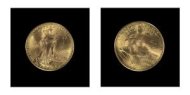
The rare coins (pictured), first struck in 1850, show a flying eagle on one side and a figure representing liberty on the other. One such coin recently sold at auction for $7.6 million, meaning the Langbords' trove could be worth as much as $80 million.
The coins are part of a batch that were struck but then melted down after President Roosevelt took the country off the gold standard in 1933, during the Great Depression. Two were given to the Smithsonian Institution*, but a few more mysteriously escaped.
The government has long believed that Switt schemed with a corrupt cashier at the Mint to swipe the coins. They note that the deposit box in which the coins were found was rented six years after Switt's death, and that the family never paid inheritance tax on the coins.
A lawyer for the Langbords counters that the coins could have left the Mint legally since it was permissible to swap gold coins for gold bullion.
Authorities in the Roosevelt era twice looked into Switt's coin dealings, including his possession of Double Eagle coins. In 1944, Switt's license to deal scrap gold was revoked.
The battle over the Double Eagles is hardly the only recent coin contretemps. Two British metal-detecting enthusiasts are said to be locked in a bitter dispute over how to divide the profits from a horde of Iron Age gold coins that they unearthed together in eastern England in 2008.
And an 80-year-old California man was jailed in 2009 after allegedly hitting another man in the head with a metal pipe and firing a gun at a third man during a dispute over missing gold coins.
Some coin disputes involve more than wrangling over valuable collectors' items. In 2007, Secret Service and FBI agents raided an Indiana company called Liberty Dollar, in a bid to stamp out illegal currency. The firm was making "Ron Paul Silver Dollars," in honor of Rep. Ron Paul, whose presidential campaign advocates bringing back the gold standard.
And since we're talking about coins, here's a list of the ten most valuable coins you might find in your pocket change.
* This sentence previously referred incorrectly to the "Smithsonian Institute."

Tuesday, 5 July 2011

America's Most Beautiful Landmarks

From soaring man-made monuments to jaw-dropping natural landforms, the U.S. has a wealth of beautiful landmarks.


Niagara Falls, New York .


While the Eiffel Tower, the Taj Mahal, and Mount Fuji may be the first images that come to mind when we picture beautiful landmarks, the truth is that there are numerous dazzling sights—both natural and man-made—right here in the United States.

The past century-and-a-half has seen the creation of two organizations that work together to protect America’s national treasures. After the first national park, Yellowstone, was established in 1872 to protect the natural beauty of its world-famous geyser basins and wildlife, the U.S. National Park Service was founded in 1916—and now oversees the preservation of 58 parks around the country. Later, the National Historic Preservation Act of 1966 created the National Register of Historic Places, to protect landmarks that specifically illustrate the heritage of the United States.

Not all of the landmarks on our list have been officially designated as state parks or National Historic Places. And, on their surface, many of them may seem dissimilar: one is an extraordinary (and still active) volcano, while another is a lighthouse; one is a mighty waterfall, while another is a centuries-old desert adobe settlement. But what’s amazing is that these landmarks, disparate though they are, share a home right here on U.S. soil. And all of them have played a part, however small, in our national history.

Niagara Falls, New York


More than 750,000 gallons of water per second thunder down this iconic 167-foot waterfall—the most powerful on the North American continent. The falls straddle the border between the U.S. and Canada, and though some argue that Horseshoe Falls—set on the Ontario side—is more spectacular than the smaller American Falls, the landmark has held a particular place in American history ever since 1901, when Michigan schoolteacher Annie Edson Taylor was the first person to go over the falls (and survive) in a barrel.

How to See It: Take a half-hour water tour on the Maid of the Mist ferry, which has boarding docks in both countries.

Mount Rushmore National Memorial, Keystone, South Dakota


Carved into a granite mountain face in South Dakota’s southwesterly Black Hills, this sculpture of four of America’s most influential presidents (Washington, Jefferson, Lincoln, and Theodore Roosevelt) was considered an extraordinary feat of engineering when it was completed in 1941—and it’s still majestic today, bringing in more than two million visitors per year.

How to See It: If you visit in winter, you’ll be able to avoid the summer crowds and see the monument dusted with snow. In warmer months, though, try to catch the evening lighting ceremony (starting at 9 p.m.), where park rangers slowly illuminate the enormous granite faces above.

Golden Gate Bridge, San Francisco


Stretching 1.7 miles high above the mist-enshrouded waters of San Francisco Bay, this peaked, vermilion-painted suspension bridge (the color is officially known as International Orange) is as striking today as it was when it was completed in 1937. The natural surroundings—including the coves and forested bluffs of Marin County; the island of Alcatraz; and numerous sailboats, barges, kite-surfers, and even frolicking seals—can all be seen from the bridge on a clear day.

How to See It: Walking at least partway along the bridge’s pedestrian path allows for the most dramatic views (and best photo ops).

The Wave, Coyote Buttes, Arizona


Set in the remote Paria Canyon-Vermilion Cliffs Wilderness in northern Arizona, this dazzling rock formation, which looks like a cresting wave frozen in time, isn’t easy to access: you’ll need a permit from the Bureau of Land Management, which allows only 20 people per day to visit the delicate landform. But getting to see this fiery swirl of Jurassic-age sandstone, carved by the wind more than 190 million years ago, is well worth a little advance planning.

Twitter Delicious Facebook Digg Stumbleupon Favorites More