skip to main |
skip to sidebar
00:51
rabiul islam

The custom-made 1925 Rolls Royce was originally commissioned by Umed Singh II, the maharaja of Kotah in the 1920s at a time when tiger hunting was hugely popular in India.
The flaming red vehicle, with a convertible canvas roof and bespoke hunting features including a double-barreled shotgun, spotlights for night hunting and a mountable Lantaka cannon, is expected to fetch up to $1 million when it goes on the block in mid-August in Carmel, California.
"It was quite common, most of the maharajahs had specialized customized cars manufactured in the US and they even had gilted frames and all sorts of things," said Pran Nevile, a writer and expert on India's colonial era known as the British Raj.
The car's 8.0-liter, 6-cylinder engine with a low gearing ratio allowed "it to creep powerfully through the roughshod jungles of Rajasthan," wrote Bonhams.
For centuries, big game hunting of tigers, leopards and Asiatic lions in India's forests was a favored pastime of India's rulers from the Mughal emperors to the British elite.
While much tiger hunting was carried out on elephant-back, some Indian maharajahs, or "great kings" of princely states across India including arid Rajasthan, took things to the extreme.
"It was more for a show but everything would be ready and then they would then go and take this Rolls Royce up to a point or the hills and from there shoot the tiger that was already captured by their servants," Nevile told Reuters.
Indiscriminate hunting, however, decimated India's Bengal tiger population from an estimated 40,000 a century ago to about 1,700 today. Tigers are now a protected keystone species throughout Asia from Indonesia's Sumatra to Indochina and India.
Indian maharajas were known for their high living and extravagant spending on all manner of trappings including ornate palaces, vintage cars and Louis Vuitton bags.
The nawab, or ruler, of southern Hyderabad state used the famed Koh-i-Noor diamond, once the largest known gemstone in the world, as a paperweight, while the nawab of tiny western Junagadh state was renowned for spending lavishly on his dog's wedding.
"They wanted to live in ostentatious style. Being a princely lot they had their own grand style and it was even copied by the British," said Nevile.
21:10
rabiul islam
A jeweler's heirs are fighting the United States government for the right to keep a batch of rare and valuable "Double Eagle" $20 coins that date back to the Franklin Roosevelt administration. It's just the latest coin controversy to make headlines. Philadelphian Joan Langbord and her sons say they found the 10 coins in 2003 in a bank deposit box kept by Langbord's father, Israel Switt, a jeweler who died in 1990. But when they tried to have the haul authenticated by the U.S. Treasury, the feds, um, flipped.
They said the coins were stolen from the U.S. Mint back in 1933, and are the government's property. The Treasury Department seized the coins, and locked them away at Fort Knox. The court battle is set to kick off this week.
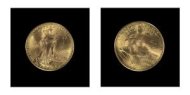
The rare coins (pictured), first struck in 1850, show a flying eagle on one side and a figure representing liberty on the other. One such coin recently sold at auction for $7.6 million, meaning the Langbords' trove could be worth as much as $80 million.
The coins are part of a batch that were struck but then melted down after President Roosevelt took the country off the gold standard in 1933, during the Great Depression. Two were given to the Smithsonian Institution*, but a few more mysteriously escaped.
The government has long believed that Switt schemed with a corrupt cashier at the Mint to swipe the coins. They note that the deposit box in which the coins were found was rented six years after Switt's death, and that the family never paid inheritance tax on the coins.
A lawyer for the Langbords counters that the coins could have left the Mint legally since it was permissible to swap gold coins for gold bullion.
Authorities in the Roosevelt era twice looked into Switt's coin dealings, including his possession of Double Eagle coins. In 1944, Switt's license to deal scrap gold was revoked.
The battle over the Double Eagles is hardly the only recent coin contretemps. Two British metal-detecting enthusiasts are said to be locked in a bitter dispute over how to divide the profits from a horde of Iron Age gold coins that they unearthed together in eastern England in 2008.
And an 80-year-old California man was jailed in 2009 after allegedly hitting another man in the head with a metal pipe and firing a gun at a third man during a dispute over missing gold coins.
Some coin disputes involve more than wrangling over valuable collectors' items. In 2007, Secret Service and FBI agents raided an Indiana company called Liberty Dollar, in a bid to stamp out illegal currency. The firm was making "Ron Paul Silver Dollars," in honor of Rep. Ron Paul, whose presidential campaign advocates bringing back the gold standard.
And since we're talking about coins, here's a list of the ten most valuable coins you might find in your pocket change.
* This sentence previously referred incorrectly to the "Smithsonian Institute."