President of India's ruling Congress party Sonia Gandhi, who underwent surgery in the US recently for an unspecified ailment, is "much better", her son Rahul Gandhi said yesterday.
Rahul, who returned here yesterday after attending to his mother, told reporters that "she is much better".
Sonia had left earlier this month for the US where she underwent successful surgery.
we also know that she is a wonderful lady for indians politics.Many years ago she become prime minister of india.but she left her sit for indian.So we can say that she is much better for india.
Iraq's parliament is chasing about $17 billion of Iraqi oil money it says was stolen after the 2003 US-led invasion and has asked the United Nations for help to track it down.
The missing money was shipped to Iraq from the United States to help with reconstruction after the ouster of Saddam Hussein.
In a letter to the UN office in Baghdad last month, parliament's Integrity Committee asked for help to find and recover the oil money taken from the Development Fund of Iraq (DFI) in 2004 and lost in the chaos that followed the invasion.
"All indications are that the institutions of the United States of America committed financial corruption by stealing the money of the Iraqi people, which was allocated to develop Iraq, (and) that it was about $17 billion," said the letter sent to the UN with a 50-page report. The committee called the disappearance of the money a "financial crime" but said UN Security Council resolutions prevent Iraq from making a claim against the United States.
"Our committee decided to send this issue to you ... to look into it and restore the stolen money," said the letter.
UN officials were not immediately available for comment.
SALARIES, PENSIONS
The DFI was established in 2003 at the request of the Coalition Provisional Authority (CPA), the US body headed by Paul Bremer that governed Iraq after the invasion. The fund was to be used to pay the salaries and pensions of Iraqi government workers and for reconstruction projects.
In 2004, the administration of former US President George W Bush flew billions of dollars in cash into Iraq. The money came from the sale of Iraqi oil, surplus funds from the UN oil-for-food program and seized Iraqi assets.
Last July, an audit report from the US Special Inspector General for Iraq Reconstruction (SIGIR) said the US Department of Defense was unable to account properly for $8.7 billion of Iraqi oil and gas money after the 2003 invasion.
Iraqi government spokesman Ali al-Dabbagh told Al Jazeera television on Sunday: "No one on the Iraqi side was controlling the work of Paul Bremer at that time. So I think the administration of the United States needs to give the answers for where and how this (money) was being used.
"We do understand that Iraqis are also engaged in such lack of transparency and corruption related to the Paul Bremer time in Iraq," he added.
Osama al-Nujaifi, Iraq's parliament speaker, said a committee was investigating what happened to some $20 billion of DFI money.
"Some of these funds were spent and are documented. But some do not have such documents," he said. "We as a parliament are working together with the Iraqi Board of Supreme Audits and with coordination of SIGIR to know where this money ended up."
The appeal to the United Nations could help Iraq recover its money by putting its case before the international community, said Bahaa al-Araji, the head of the Integrity Committee.
"We cannot sue the Americans. Laws do not allow us to do that. All we want is to get this issue to the UN," Araji said. "If this works, it will open the way for Iraq to restore its stolen money." In 2003, the CPA issued an order granting immunity to US personnel and institutions working in Iraq.
Syrian President Bashar al-Assad said on Monday "saboteurs" were behind unrest against his rule and that political accommodation could not be reached with gunmen.
In just his third speech since the demonstrations began four months ago, Assad appeared tense as he pledged to pursue a national dialogue on reform and held out the prospect of expanding a recent amnesty.
But he said: "We have to distinguish between (protesters, and others who have legitimate demands) and saboteurs. The saboteurs are a small group that tried to exploit the kind majority of the Syrian people to carry out their many schemes."
No political solution was possible with people carrying weapons, he said.
As Syrian forces swept through the northwestern border region with Turkey, blocking refugees fleeing a military crackdown, Assad called on the 10,000 who have already crossed the frontier to come home.
"There are those who give them the impression that the state will exact revenge, I affirm that is not true. The army is there for security," he said in the speech at Damascus University.
A committee on national dialogue will meet in the next few days and invite more than 100 personalities to discuss the criteria and mechanism for constitutional reform, he said. He set a one-month target date for presenting recommendations.
Syria's military operation along the Turkish border follows the biggest protests in four months of anti-Assad unrest on Friday which a violent clampdown has failed to quash.
Security forces shot dead up to 19 protesters on Friday, rights groups said.
In addition to the more than 10,000 Syrian refugees now in Turkey, a further 10,000 are sheltering close to the border just inside Syria in the olive groves and rich farmland around the town of Jisr al-Shughour, Turkish officials said.
But Syrian human rights campaigner Ammar al-Qurabi said the army was now stopping those still inside Syria from leaving.
"The Syrian army has spread around the border area to prevent frightened residents from fleeing across the border to Turkey," he told.
Qurabi also accused pro-government forces of attacking people trying to aid the refugees as they fled.
The violence so close to its border challenges Turkey's foreign policy of "zero problems with neighbors" that has seen it befriend the Middle East's autocratic rulers while presenting itself as a champion of democracy.
Turkish Prime Minister Recep Tayyip Erdogan said Turkey has pledged to keep his borders open to refugees and has called the Syrian government crackdown "savagery," but beyond words, it is not clear whether Ankara's rapprochement with Damascus has earned Turkey any influence with Assad to halt the violence.
REFUGEES "FEAR GETTING SHOT"
Syrian troops and gunmen loyal to Assad seized the town of Bdama, only 2 km (1.2 miles) from Turkey on Saturday, burning houses and arresting dozens, witnesses said.
"There are roadblocks everywhere in Bdama to prevent people from fleeing but villagers are finding other routes through valleys to escape to the Turkish border," said Omar, a farmer from Bdama who managed to reach the border area.
"We received no bread today. There was one bakery operating in Bdama but it has been forced to shut. The 'shabbiha' (Assad's gunmen) are shooting randomly," one refugee, a carpenter who gave his name as Hammoud, told Reuters by telephone.
"One man in Bdama was injured today and we managed to smuggle him to hospital in Turkey. But many fear getting shot if they attempt to cross the border," the refugee added.
Faced with troops firing live ammunition, Syrian protesters have taken to venting their anger against Assad at night.
Demonstrations erupted overnight in the cities of Hama, Homs, Latakia, Deir al-Zor, the town of Madaya near the Lebanese border, several suburbs of the capital Damascus and in Albu Kamal on the border with Iraq, witnesses and activists said.
Authorities blame the violence on armed groups and Islamists, backed by foreign powers. Syria has barred most international journalists from entering the country, making it difficult to verify accounts from activists and officials.
Syrian rights groups say at least 1,300 civilians have been killed and 10,000 people detained since March.
The Syrian Observatory for human rights has said more than 300 soldiers and police have also been killed. Other rights campaigners said dozens of security personnel had been killed by loyalist troops for refusing to shoot at unarmed civilians.
Even so, Russian President Dmitry Medvedev practically ruled out supporting a UN resolution condemning Syria's crackdown on pro-democracy protesters.
Barack Obama overruled the advice of administration lawyers in deciding the US could continue participatingin the Libya conflict without congressional approval.
The White House insists the president did not need congressional approval to authorise US support for Nato's mission, because the military campaign is limited in scope.
Critics argue the action violates a Vietnam War-era law limiting military action without congressional approval to 60 days.
Pentagon General Counsel Jeh Johnson and acting head of the justice department's Office of Legal Counsel Caroline Krass had advised Obama that the US involvement in the Libya air campaign constituted "hostilities".
But the US president opted to follow the advice of White House counsel Robert Bauer and state department legal adviser Harold Koh, who argued the US involvement fell short of "hostilities.
US presidents can override the legal conclusions of the Office of Legal Counsel, but it is very rare for that to happen, analysts say.
The War Powers Resolution of 1973 states Congress must authorise participation in hostilities longer than 60 days, although the president can seek a 30-day extension.
The United States is holding talks with the Taliban, Afghan President Hamid Karzai said, in the first official confirmation of such contacts after nearly 10 years of war.
Although diplomats and officials say talks are at a very early stage, Karzai's remarks highlight the increasing focus on finding a political solution in Afghanistan as foreign combat troops prepare to pull out by 2014.
"Talks with the Taliban have started... the talks are going on well," Karzai said, addressing a conference in Kabul.
"Also foreign forces, especially the United States, are carrying out the talks themselves."
But the problems surrounding any reconciliation bid were thrown into sharp focus shortly afterwards when nine people died as three Taliban attackers armed with suicide vests and machine guns stormed a Kabul police station.
A British soldier was shot dead in an insurgent attack, the defence ministry said, while France confirmed one of its troops was also fatally wounded by militant gunfire.
The militants have consistently rejected any efforts to talk peace in public statements.
"We have already said this and have repeated it many times. We have no negotiation with the United States and we deny any report as such," Taliban spokesman Zabihullah Mujahid told AFP.
A US State Department spokeswoman in Washington had "no comment" on Karzai's statement.
"However, we have consistently supported an Afghan-led process of reconciliation," spokeswoman Megan Mattson told AFP.
"Currently, we have a broad range of contacts across Afghanistan and the region, and at many levels, to support that effort."
The US embassy in Kabul did not respond to a request for comment on the latest remarks from Karzai, who is known for dropping unscripted, headline-grabbing remarks into speeches.
Western officials acknowledge on condition of anonymity that attempts to set up contacts with the Taliban are at a very early stage, while efforts to open up a communication channel with Taliban leaders are still being made.
US Secretary of State Hillary Clinton earlier this year called on Taliban members to split from Al-Qaeda, renounce violence and accept the constitution so they can be re-integrated into society.
Drone strikes and covert operations have weakened Afghanistan's Al-Qaeda network and could justify a White House decision to withdraw troops quicker than planned.
20 of Al-Qaeda's 30 prominent leaders in the region had been killed in the past year.
And US Defense Secretary Robert Gates said on a visit to Kabul this month that there could be talks with the Taliban by the end of the year if foreign troops make sufficient gains.
A report last month in Der Spiegel magazine claimed Germany was helping to mediate secret, direct talks between the US and the Taliban on German soil while the New Yorker magazine reported in February that the US had begun direct discussions with senior Taliban figures.
Karzai's comments came the day after the United Nations Security Council agreed to split the international sanctions regime for the Taliban and Al-Qaeda.
The move sends "a clear message to the Taliban that there is a future for those who separate from Al-Qaeda, renounce violence and abide by the Afghan constitution," said Susan Rice, UN envoy for the United States, which led the campaign for the division.
Afghan attempts to pursue talks with the Taliban have been public for months -- Karzai last year set up a High Council for Peace to look at the issue.
But efforts to negotiate hit an embarrassing set-back when reports in November said a Pakistani shopkeeper posing as a senior Taliban leader had been brought to Kabul for talks with the president before being exposed as a fake.
US President Barack Obama is expected to announce soon how many troops from his country will pull out from July as the process of handing control from foreign to Afghan forces starts.
It is due to conclude in 2014, when all foreign forces are scheduled to leave Afghanistan.
Obama is facing mounting pressure to announce a significant drawdown after last month's killing of Al-Qaeda leader Osama bin Laden and amid domestic economic woes and a mounting US death toll.
The Taliban's harbouring of bin Laden was the reason for the US-led invasion in 2001 following the September 11 attacks.
Republican presidential candidates led by frontrunner Mitt Romney used their first big televised debate to lash out at President Barack Obama -- but not each other. The debate in Manchester, New Hampshire, late Monday did little to define differences between the seven candidates in the unwieldy Republican line-up as White House hopefuls reserved their venom for Obama on the economy and foreign policy. The civil exchanges left Romney, who has a slight, but consistent lead in the polls, still looking like the man to beat for the nomination. Standing behind the centre podium in CNN's ultra modern studio, the carefully combed Romney looked suitably presidential as he led the charge against Obama. "Any one of the people on this stage would be a better president than President Obama," Romney said. "Why isn't the president leading? He isn't balancing our budget and he isn't leading on jobs. He's failed the American people... And that's why he's not going to be reelected." Michele Bachmann, a congresswoman and leading light of the staunchly conservative Tea Party movement, momentarily upstaged the other six when she used her opening comments to announce that she had just formally registered her candidacy. Bachmann, the only woman on the stage, pulled her punches when opportunities came to attack Romney, but she almost shouted during assaults on Obama. "President Obama has failed his leadership," she charged. Newt Gingrich, a veteran Republican who was speaker of the House of Representatives in the 1990s, piled in to attack "the Obama depression." The presidential election is not until November 2012. But candidates were using this event -- the first of many over the coming months -- to solidify their sometimes poor name recognition across the country and position themselves for a grueling campaign.
South African president Jacob Zuma, centre, King Mswati lll of the Kingdom of Swaziland, left, and Namibia’s president Hifikepunye Pohamba sit together at the opening of the tripartite SADC summit in Johannesburg.
African leaders Sunday agreed to a framework to guide the next phase of negotiations on creating the continent’s biggest free-trade bloc, in a communiqué issued after a day of talks.
The new bloc would integrate the Common Market for Eastern and Southern Africa, the East African Community and the Southern African Development Community, an idea first backed in 2008. It would combine 26 countries home to 700 million people with a combined economy estimated at $875 billion.
The bloc aims to enhance connectivity among the nations and reduce costs of doing business, while increasing investment flows to address capacity constraints.
‘It is now well documented that regional integration is one of the four factors that have sustained Africa’s growth in the last decade, as well as the quick and robust recovery from the recent financial crisis,’ said Eratus Mwencha, the deputy chairman of the AU Commission.
‘We all know that trade can act as an engine of growth,’ said Mwencha. ‘For the people of Africa, this will mean a paycheque in their pocket.’
The International Monetary Fund expects Africa to grow faster than the global average in the coming years. Six of the world’s 10 fastest-growing economies were on the continent last year.
Mwencha added that it was projected that Africa would double its GDP in the next ten years, a growth expected to be propelled by the growing middle class.
The mega-bloc would bring together the continent’s most developed economies of South Africa and Egypt and some of its most energetic, such as Angola and Ethiopia.
It is expected to end the challenges presented by the current trade blocs which have different rules, with some countries belonging to more than one grouping, complicating efforts to streamline trade.
‘This Tripartite is blazing a path to be followed by other regions in Africa in realising the dream of a united Africa,’ said Sindiso Ngwenya, general secretary of the Common Market for Eastern and Southern Africa. ‘There are a number of areas where, by building on the work already done by member and partner states, working regionally, we can expect quick wins,’ he said.
But the pact faces immense hurdles: tariff barriers, poor infrastructure, weak supply chains, and economies often largely reliant on natural resources rather than manufactured products.
The three existing free trade areas — of which the five-member East African Community is the most advanced — have failed to meet intra-trade targets despite removing the bulk of trade tariffs. And the bloc includes countries hit by conflicts, coups and political turmoil, such as Libya, Madagascar, Sudan and Zimbabwe.
New World Bank research says trade within southern African accounts for just 10 per cent of the total in the region — compared to 60 per cent in Europe and 40 per cent in North America.
Southern African Development Community exports increased from 20 to more than 30 per cent of combined GDP over the past decade, but regional trade made up a mere three per cent of the increase.
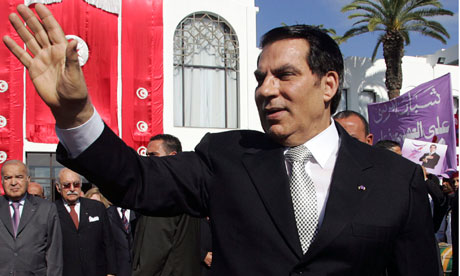
Former Tunisian president Zine al-Abidine Ben Ali, who fled to Saudi Arabia in January, will be tried in absentia on June 20, Tunisia's interim prime minister said Monday.
"Ben Ali's trial will start on June 20," Beji Caid Sebsi said in an interview on Al Jazeera television. "He will be tried in a military and in a civilian court."
Ben Ali fled to Jeddah after he was toppled by mass protests on January 14 after 23 years in power. Several members of his family and security and some of his closest allies were detained shortly after he was forced out.
Tunisian authorities have been preparing several legal cases against Ben Ali, including conspiring against the state, voluntary manslaughter and drug trafficking.
The caretaker authorities, trying to assert their authority and gain legitimacy in the eyes of protesters who forced the transition, are attacking the vestiges of his long rule.
Saudi authorities have not responded to a request by Tunis to extradite Ben Ali and his wife Leila Trabelsi.
Former Egyptian President Hosni Mubarak, who was ousted shortly after Ben Ali, is also due to stand trial for the killing of protesters and could face the death penalty.
US president Barack Obama on Saturday called for the private sector to create more jobs, but underlined the government’s role in promoting professional education. ‘Now, government is not — and should not be — the main engine of job-creation in this country. That’s the role of the private sector,’ the president said in his weekly radio and internet address. ‘But one thing government can do is partner with the private sector to make sure that every worker has the necessary skills for the jobs they’re applying for,’ Obama added. His comments came after labour department figures showed only 54,000 new jobs had been created in May, just a quarter of the February-April pace; the unemployment rate had edged up to 9.1 per cent. The White House and economists cautioned that the poor data was likely a monthly blip, but it has fuelled allegations that Obama’s economic policies are failing, 18 months ahead of the presidential election. The president noted that the US economy had not got into what he called a ‘mess’ overnight, and would not resolve its problems quickly. ‘It’s going to take time,’ he warned. Obama pointed to the importance of investing in wind power, solar power, and biofuels to make America less dependent on foreign oil and to clean up the environment. ‘These are steps we know will make a difference in people’s lives — not just twenty years from now, or ten years from now, but now, and in the months to come,’ the president said.
Plans are on track for Afghan forces to take charge of security in seven areas of Afghanistan from late July with a second phase of the handover starting in December, NATO commanders said on Thursday.
Major-General Tim Evans, a senior British officer with the NATO-led International Security Assistance Force (ISAF), on a video link from Afghanistan, said the first set of areas would start transferring from ISAF to Afghan control on July 20.
Afghan President Hamid Karzai said in March that seven areas would be included in the initial phase of transition, the first step in a long process due to end with the withdrawal of all foreign combat troops from Afghanistan by 2014.
Karzai has said the transition would begin in the Afghan month of Saratan, which runs from June 22 to July 22 on the Western calendar, but has not given an exact date.
Lieutenant-General David Rodriguez, the second most senior US commander in Afghanistan, speaking on the same video conference with reporters, said the Afghan government was "walking through all the plans and preparations now" for the first phase of transition.
Afghan authorities had begun "face-to-face meetings down at the local level" in preparation for the handover and were very satisfied with ISAF's plans to support the transition, he said.
"They are already looking forward to the next group (of areas for transition) that will be announced in the fall and initiate the process in December," said Rodriguez, commander of day-to-day operations for the 150,000-strong NATO-led force.
TROOP DRAWDOWN
The move is part of NATO's strategy to hand over responsibility to an expanding Afghan force gradually, allowing reductions in foreign forces currently battling Taliban insurgents.
President Barack Obama is expected to announce soon he will bring home a sizable number of the 100,000 US troops in Afghanistan starting in July.
The relatively peaceful provinces of Bamiyan and Panjshir, the western city of Herat, areas around the capital Kabul and part of eastern Laghman province are among the first areas to be handed over.
Also on the transition list are Mazar-i-Sharif in the north and Lashkar Gah, capital of volatile southern Helmand province.
Evans said the transition did not mean that all British troops in Lashkar Gah would suddenly leave in July.
"We've got to make sure we still support the Afghan forces," he said. But if conditions allowed, troops from areas that had been handed over would be moved to help other areas progress toward transition, he said.
Evans also said that the level of violence during this year's "fighting season" was likely to be "as high if not higher than last year" because ISAF forces were pursuing insurgents.
NATO had anticipated that the insurgents might concentrate on areas singled out for transition to Afghan control, he said.
Osama bin Laden's killing in a US raid in Pakistan last month has fueled calls in the United States for a faster drawdown of troops.
Rodriguez said the al Qaeda leader's death had so far had no discernible effect on the ground, although he hoped bin Laden's influence on the Taliban would now decline.
President Obama greets a student during a visit to Northern Virginia Community College in Alexandria, Virginia, June 8, 2011.
Credit: Reuters/Kevin Lamarque
President Barack Obama retains a big lead over possible Republican rivals in the 2012 election despite anxiety about the economy and the country's future, according to a Reuters/Ipsos poll on Wednesday. Obama's approval rating inched up 1 percentage point from May to 50 percent but the number of Americans who believe the country is on the wrong track also rose as pricier gasoline, persistently high unemployment and a weak housing market chipped away at public confidence.
Obama leads all potential Republican challengers by double-digit margins, the poll showed. He is ahead of his closest Republican rival, former Massachusetts governor Mitt Romney, by 13 percentage points -- 51 percent to 38 percent.
"Obama's position has gotten a little stronger over the last couple of months as the public mood has evened out, and as an incumbent he has some big advantages over his rivals," Ipsos pollster Cliff Young said.
"Until Republicans go through a primary season and select a nominee, they are going to be at a disadvantage in the head-to-head matchups in name recognition."
Obama, who got a boost in the polls last month with the killing of al Qaeda leader Osama bin Laden, is amassing an election campaign warchest likely to be larger than the record $750 million he raised in 2008.
Sarah Palin and Romney lead the Republicans battling for the right to challenge Obama in the November 2012 election.
Palin, the party's vice presidential nominee in 2008, had the support of 22 percent of the Republicans surveyed. The former governor of Alaska has not said whether she will run for president next year.
Romney, who failed in a 2008 presidential bid, had 20 percent support.
Representative Ron Paul, a libertarian Republican from Texas, and former pizza executive Herman Cain were tied for third with 7 percent each.
REPUBLICAN RACE STILL FORMING
The Republican candidates are just starting to engage in their slow-starting nomination race. Young said Palin and Romney had a clear advantage at this stage over other challengers in name recognition among voters.
Other surveys have shown Romney in a stronger position. A Washington Post-ABC News poll earlier this week gave Romney a slight lead over Obama among registered voters.
In the Reuters/Ipsos poll, the other Republican contenders fared even worse than Romney's 13-point gap in a match-up with Obama. Palin trailed Obama by 23 points and former Minnesota Governor Tim Pawlenty was behind by 19 points.
The survey was taken after weak jobs and housing figures released last week showed the U.S. economy is recovering slower than expected. Unemployment rose slightly to 9.1 percent for the month.
The poll found 60 percent of respondents said the country is on the wrong track, up from 56 percent in May but still below April's high of 69 percent. In the latest survey, 35 percent said the country is going in the right direction.
Obama's approval rating has drifted in a narrow range between 49 percent and 51 percent since January, with the exception of April when the first spike in gasoline prices drove his rating lower.
With Congress battling over a Republican budget plan that includes scaling back the federal Medicare health program for the elderly, the poll found a plurality of Americans, 43 percent, oppose the Medicare cuts and 37 percent support them.
The poll, conducted Friday through Monday, surveyed 1,132 adults nationwide by telephone, including 948 registered voters. The margin of error is 3 percentage points.
Yemeni President Ali Abdullah Saleh is “stable” after being treated in Riyadh for bomb wounds. The veteran leader’s health status has been sketchy since he was flown on Saturday to Riyadh for treatment from wounds sustained in a bomb attack the day before on his presidential compound. He has not been seen in public since. “The condition of the Yemeni president is stable,” a Saudi official said on condition of anonymity, adding the beleaguered president was waiting for doctors to “appoint a date for cosmetic surgery.” Saleh, 69, would undergo a cosmetic operation to treat “light burns on the scalp,” he said, adding that “reports on the deterioration of his health condition are baseless.” On Tuesday, US officials said Saleh was burned over 40 percent of his body and suffered bleeding in the brain from the attack, indicating his wounds were worse than initially reported. The revelation cast doubts on a quick return to Yemen and pointed to a deepening power vacuum. Yemeni Vice President Abdrabuh Mansur Hadi has insisted that Saleh is in good condition and that he will return to Yemen within days. The Saudi newspaper Al-Watan yesterday quoted a Yemeni diplomat in Riyadh as saying that Saleh’s condition was no longer critical despite his having been “in great danger” earlier.
Syria's harsh and stagnant dictatorship at first seemed immune to the wave of unrest that swept through most of the Arab world after the revolution in Tunisia in January 2011. But in mid-March, demonstrations broke out in several cities, and grew rapidly after security forces fired on protesters.
The country's president is Bashar al-Assad, the son of Hafez al-Assad, who ruled with an iron hand for three decades before his death in 2000. The Assads belonged to the Allawite sect, a minority that came to hold most of the top positions in the government and military. Under Hafez al-Assad, Syria was reviled in the West for its support of terrorist groups and generally isolated even from more moderate Arab countries. Bashar al-Assad from time to time made gestures toward greater openness. But it remained one of the region's most repressive regimes.
In February 2011, after the fall of Egypt's strongman, Hosni Mubarak, a handful of demonstrations were called in Syria. But the demonstrators were always outnumbered by the police, and were quickly arrested or dispersed. Large protests began in March in the southern town of Dara’a, where citizens were outraged by the arrest of more than a dozen schoolchildren for writing graffiti. More protests followed, in Dara'a and other parts of the country, although they never emerged at any size in the country's two largest cities, Damascus and Aleppo.
In Syria, Mr. Assad at first seemed to veer between offers of concessions and force. On April 16, he pledged to meet one of the demonstrators’ main demands by lifting the emergency law. But just days later, he launched what became a withering crackdown: security forces fired on demonstrators across the country, killing dozens, the army sent tanks into Dara'a and hundreds of government opponents were arrested or were reported to have disappeared. By May 31, human rights groups said that more than 1,000 had been killed and as many as 10,000 people were reported to be in custody or missing.
By early May, government officials spoke of gaining the upper hand, but demonstrations continued, if on a smaller scale, as the unrest settled into a bloody standoff of protest and reprisal. The protests seemed reinvigorated in early June by a video that showed the body of a 13-year-old boy from Dara'a who had been tortured and killed.
Even if it fails, the uprising has demonstrated the weakness of a dictatorial government that once sought to draw legitimacy from a notion of Arab nationalism, a sprawling public sector that created the semblance of a middle class and services that delivered electricity to the smallest towns. The government of Mr. Assad, though, is far different than that of his father, who seized power in 1970. A beleaguered state, shorn of ideology, can no longer deliver essential services or basic livelihood. Mr. Makhlouf’s warnings of instability and sectarian strife like Iraq’s have emerged as the government’s rallying cry, as it deals with a degree of dissent that its officials admit caught them by surprise.
Protest Timeline
June 6 Syria’s state news agency reported that “armed gangs” had killed 120 police and security personnel in multiple attacks on security forces in a northwestern town. The state broadcaster showed no images from the town, despite scrolling text on Syrian television that spoke of a “massacre” of security forces. Protesters could not be immediately reached in the area, but opposition activists repudiated any suggestion that antigovernment protesters had mounted such an attack.
June 5 Syrian military forces were reported to have killed 38 people in the northern province of Idlib over the weekend, demonstrators and rights activists said, as security forces appeared to redeploy from other towns to join the latest front in the harsh crackdown on a three-month-old popular uprising against the government of President Bashar al-Assad.
June 3 Syrians poured into the streets in some of the largest antigovernment protests yet despite the shutdown of much of the country’s Internet network. At least 40 protesters were killed in Hama, according to local activists. That report could not be immediately confirmed. The demonstrations were fueled in part by escalating anger over the torture and killing of a 13-year-old boy from the southern region of Dara’a.
June 1 Syrian military forces killed 42 people, including a 10-year-old boy and 4-year-old girl, in raids on a string of towns around the central city of Homs.
May 31 President Bashar al-Assad issued a general amnesty. Syrian state media reported that the amnesty would be broad and would include members of the outlawed Muslim Brotherhood, but details issued late in the day by the government indicated that it amounted to little more than sentence reductions for certain crimes.
May 30 A video of the mutilated body of a 13-year-old boy seized, tortured and killed by government forces has injected new life into the uprising.
Libya, an oil-rich nation in North Africa, spent more than 40 years under the firm, if erratic, leadership of Col. Muammar el-Qaddafi. But in February 2011, the unrest sweeping through much of the Arab world erupted in several Libyan cities. Though it began with a relatively organized core of antigovernment opponents in Benghazi, its spread to the capital of Tripoli was swift and spontaneous. Colonel Qaddafi lashed out with a level of violence unseen in either of the other uprisings, but an inchoate opposition cobbled together the semblance of a transitional government, fielded a makeshift rebel army and portrayed itself to the West and Libyans as an alternative to Colonel Qaddafi's corrupt and repressive rule.
Momentum shifted quickly, however, and the rebels faced the possibilty of being outgunned and outnumbered in what increasingly looked like a mismatched civil war. Then as Colonel Qaddafi’s troops advanced to within 100 miles of Benghazi, the rebel stronghold in the west, the United Nations Security Council voted to authorize military action, a risky foreign intervention aimed at averting a bloody rout of the rebels by loyalist forces. On March 19, American and European forces began a broad campaign of strikes against Colonel Qaddafi and his government, unleashing warplanes and missiles in a military intervention on a scale not seen in the Arab world since the Iraq war.
The attacks prompted two of Colonel Qaddafi's sons to float a proposal that would remove him from power, which the rebels rejected. Meanwhile, their ragtag forces surged forward and back, unable to make progress against the army despite the help from above but no longer in grave peril. In mid-April, Britain, France and Italy said they would send military liaison officers to help the rebels, a tacit admission that the airstrikes had failed to disable the government's forces. Suffering deepened in the besieged rebel-held city of Misurata in western Libya, as government forces pounded it with artillery, rockets, cluster bombs and land mines. But in mid-May the rebels retook the city's airport and appeared to be on the verge of lifting the siege, as NATO officials expressed greater confidence that their bombing campaign was degrading the government's forces.
In late May, Colonel Qaddafi rebuffed a mediation effort by South Africa's president, Jacob Zuma, saying he would fight on. His words appeared to reflect a darkening sense of isolation, brought on by 10 weeks of NATO bombing, rebel advances in the east, Western leaders’ recent reaffirmation of demands for Colonel Qaddafi to quit, and the fact that Russia, an old ally of Libya, had joined those demands.
LATEST DEVELOPMENTS:
June 3 The House of Representatives voted to harshly rebuke President Obama for continuing to maintain an American role in NATO operations in Libya without the express consent of Congress, and called for detailed information about its cost and objectives. The resolution, which passed 268 to 145, was offered by Speaker John Boehner to siphon off swelling Republican support for a measure sponsored by Representative Dennis J. Kucinich, an Ohio Democrat, which calls for a withdrawal of the United States military.
June 1 In Brussels, NATO Secretary-General Anders Fogh Rasmussen said the alliance would extend its mission for 90 days, saying “This decision sends a clear message to the Qaddafi regime: We are determined to continue our operation to protect the people of Libya.” Antigovernment unrest was reported in Tripoli for the first time in months.
May 31 In talks with South Africa's president, Jacob Zuma, the Libya leader Col. Muammar el-Qaddafi “emphasized” that he will not leave Libya despite air attacks and international pressure, according to Mr. Zuma, who went to Tripoli to mediate on behalf of the African Union.
May 27 Russia has offered to use its contacts in the Libyan government to facilitate Col. Muammar el-Qaddafi’s departure from power, top officials announced at a meeting of the Group of 8 countries. The announcement, which came after intensive talks between President Barack Obama and President Dmitri A. Medvedev, represents a marked shift in Russia’s tone on the conflict.
May 24 In the heaviest attack yet on the capital since the start of the two-month-old NATO bombing campaign, alliance aircraft struck at least 15 targets in central Tripoli, with most of the airstrikes concentrated on an area around Col. Muammar el-Qaddafi’s command compound.
Read More...
May 22 The European Union’s foreign policy chief visited Benghazi, and rebels said the high-profile trip was evidence of growing international recognition for their cause.
May 20 NATO officials expressed increased confidence that Col. Muammar el-Qaddafi’s military position was weakening, and that allied airstrikes had prevented his forces from making sustained attacks on rebel forces and had driven him into hiding.
May 17 The oil minister of Libya fled to neighboring Tunisia over the weekend, the Tunisian Interior Ministry said, in what appeared to be another high-level defection from the increasingly isolated government of Col. Muammar el-Qaddafi.
May 16 The prosecutor of the International Criminal Court in The Hague sought arrest warrants for Col. Muammar al-Qaddafi of Libya, his son and his brother-in-law on charges of orchestrating systematic attacks against civilians that amount to crimes against humanity.
May 15 Two months into the NATO bombing campaign against Col. Muammar el-Qaddafi’s forces, Britain’s top military commander has said that the Libyan leader could remain “clinging to power” unless NATO broadened its bombing targets to include the country’s infrastructure.
May 12 A day after rebels reclaimed the airport in the contested western city of Misurata, explosions echoed across Tripoli early as NATO warplanes struck a large compound belonging to Col. Muammar el-Qaddafi and other areas of the capital. President Obama and his legal advisers are deliberating about how the United States military may lawfully continue participating in NATO’s bombing campaign in Libya after the air war soon reaches a legal deadline for terminating combat operations that have not been authorized by Congress.
May 11 Rebels in the besieged city of Misurata stormed the city’s airport, reclaiming it from the military of Col. Muammar el-Qaddafi in one of the most significant rebel victories in the Libyan conflict. The western area of Misurata appeared by nightfall to be out of range of the most common of the Qaddafi forces’ heavy weapons, which have killed large numbers of rebel soldiers and civilians over the last two months.
May 10 A string of killings in the rebel stronghold of Benghazi, still unsolved, have raised the specter of a death squad stalking former Qaddafi officials. The killings have unsettled an already paranoid city, where rebel authorities have spent weeks trying to round up people suspected of being Qaddafi loyalists, and could pose a challenge to a movement trying to present a vision of a new country committed to the rule of law.
May 9 Rebel fighters made significant gains against forces loyal to Col. Muammar el-Qaddafi in both the western and eastern areas of the country, in the first faint signs that NATO airstrikes may be starting to strain the government forces.
May 8 Military forces loyal to Col. Muammar el-Qaddafi struck the fuel terminal of the rebel-controlled city of Misurata with ground-to-ground rockets, igniting a fire that threatened the city’s fuel supply.
May 6 France, which has taken a lead role in supporting rebels fighting Col. Muammar el-Qaddafi in Libya, expelled 14 Libyan diplomatic officials. The Foreign Ministry made the announcement shortly after Western nations announced plans to provide the insurgents with financial support. Earlier in the week, Britain expelled Libya’s ambassador and other diplomats from London.
May 5 The United States announced that it would try to release some of the more than $30 billion in assets seized from Col. Muammar el-Qaddafi, as international officials said they would create a fund to give money directly to the Libyan rebels. The meeting seemed to bolster a NATO-led military intervention that to critics appeared stalled.
May 4 Behind the rebel resistance in the besieged city of Misurata lies a clandestine network of rebel workshops, where makeshift weapons have been designed, assembled and pushed out.
May 3 Prime Minister Recep Tayyip Erdogan of Turkey, a key regional powerbroker, told reporters that Col. Muammar el-Qaddafi had chosen “blood, tears, oppression” and must “immediately step down.” Turkey has historic and business ties to Libya and has tried to act as an intermediary between Colonel Qaddafi’s government and rebels seeking his ouster. But Mr. Erdogan now appeared to draw a line, telling a televised news conference that Colonel Qaddafi had violently resisted calls for change and must leave power for the good of the country and the Libyan people.
May 1 Even as Col. Muammar Qaddafi denied killing civilians, shells continued to rain down on Misurata, where clinics and hospitals have confirmed at least 530 deaths from war-related trauma. This count does not include many people who did not reach medical care before they died, and were buried by their families. Estimates for the conflict as a whole have ranged as high as 30,000.
April 30 A NATO airstrike struck a house in Tripoli containing several of Col. Muammar Qaddafi's family members and killed his youngest son, Seif al-Arab Muammar el-Qaddafi, and three of the colonel’s grandchildren. Col. Qaddafi and his wife had been staying in the house, but were reported to be unharmed. The attack came shortly after Mr. Qaddafi gave a speech offering to hold talks with the rebels, but not to leave the country.
April 29 Libyan forces in more than a dozen military vehicles and armed with anti-aircraft guns and rocket launchers crossed into Tunisia as fighting with rebels raged along the western frontier, witnesses said. Tunisia's government was furious after clashes broke out on its territory and demanded Libya halt all incursions.
April 27 NATO warplanes attacked a rebel position on the front lines of Misurata, killing 12 fighters in what the rebels called a friendly fire accident. The American ambassador to Libya, speaking in Washington, said that estimates of the death toll from the violence range from 10,000 to 30,000.
April 26 NATO planners said the allies are stepping up attacks on palaces, headquarters, communications centers and other prominent institutions supporting the Libyan regime, a shift of targets that is intended to weaken Col. Muammar Qaddafi’s grip on power and frustrate his forces in the field. The strikes are meant to reduce the regime’s ability to harm civilians by eliminating, link by link, the command, communications and supply chains required for sustaining military operations. The hope is that they will lead to mass defections or a coup.
April 25 NATO warplanes struck Col. Muammar el-Qaddafi’s compound and bombed a state television facility in an escalation of the air campaign to aid the rebellion against his four decades in power. The attack suggested that nonmilitary targets would be hit in an effort to break down the instruments of Colonel Qaddafi’s broader control.
April 24 Rebel leaders said they had consolidated their control of the western city of Misurata, taking over the last two government outposts there even as government forces continued to shell the city from its outskirts.
April 23 In a sudden shift after nearly two months of heavy siege, government forces withdrew from the western city of Misurata. The departure came so quickly that even rebel leaders puzzled over whether the withdrawal was a true military victory, a subterfuge by pro-Qaddafi forces who might return in plain clothes, or a strategic redeployment to new fronts in the mountains along the western border with Tunisia. The government said the army had ceased operations in order to give tribal leaders a chance to negotiate a resolution to the siege.
April 22 The government of Col. Muammar el-Qaddafi suffered setbacks on multiple fronts as rebels in the western mountains seized a Tunisian border crossing, fighters in the besieged city of Misurata said they were gaining ground and President Obama authorized the use of armed drones for close-in fighting against the Qaddafi forces.
April 21 Libyan rebels said they had control of a post on the Tunisian border, forcing government soldiers to flee over the frontier and possibly opening a new channel for opposition forces in Col. Moammar el-Qadaffi's bastion in western Libya. And a survey of weapons carried by hundreds of rebels fighting on two fronts presents a picture of an uprising that is both underequipped and in custody of many weapons with no utility in the war. The rebels also possess weapons that if sold, lost or misused, could undermine their cause. President Obama authorized the use of armed Predator drones against Libya government forces fighting the rebellion, as NATO struggles to regain momentum since taking command of the operation from the United States.
April 20 The French and Italian governments said that they would join Britain in sending a small number of military liaison officers to support the ragtag rebel army in Libya, offering a diplomatic boost for the insurgent leader, Mustafa Abdel-Jalil, as he met with President Nicolas Sarkozy in Paris.
April 19 Britain will send experienced military officers to Libya to advise rebels fighting forces loyal to Col. Muammar el-Qaddafi. The soldiers marching orders are to help the rebels’ makeshift force “improve their military organizational structures, communications and logistics,” Britain’s foreign secretary, William Hague, said in a statement.
April 15 Forces loyal to Col. Muammar el-Qaddafi, surrounding Misurata and vowing to crush the rebellion there, fired into residential neighborhoods with heavy weapons, including cluster bombs, which were banned by much of the world. And divisions in NATO over the intensity of the air campaign emerged again on the second day of a gathering of foreign ministers. While the British foreign secretary said efforts to persuade more countries to adopt a tougher military posture toward the forces of Colonel Qaddafi were “making a bit of progress,” the Italian defense minister said his country would not order its pilots to open fire over Libya.
April 14 NATO foreign ministers gathered to wrestle with increasingly complex questions raised by the stalled conflict in Libya, seeking a formula for political progress in the absence of any decisive military gains. Pentagon officials disclosed that American warplanes had continued to strike targets there even after the Obama administration said the United States was stepping back from offensive missions and letting NATO take the lead.
April 13 NATO, Arab and African ministers met with Libya’s rebels here in a show of support for insurgents who are seeking to overthrow Col. Muammar el-Qaddafi against a backdrop of division over the pace of coalition air attacks on pro-Qaddafi forces. France and Britain have openly called on the alliance and its partners to intensify airstrikes on Libyan government troops to protect civilians, prompting an unusual public retort from NATO’s command.
April 11 African Union negotiators faced a chilly reception upon arriving in eastern Libya to try brokering a cease-fire with Libyan rebels, a day after Col. Muammar el-Qaddafi’s military forces appeared to falter in their assault against the rebel side in the battle for the strategic city of Ajdabiya.
April 9 Military forces loyal to Col. Muammar el-Qaddafi pressed a coordinated ground attack on Ajdabiya, bringing the front lines of the battle with Libyan opposition forces back to the doorstep of this strategically vital rebel city.
April 6 Stung by criticism from rebel leaders, NATO officials said that the pace of attacks on the forces of Col. Muammar el-Qaddafi was increasing, after a slight slowdown as the coalition handed off responsibility earlier in the week. Gen. Abdul Fattah Younes, the head of the rebel army, had lashed out at his Western allies during a news conference in Benghazi, accusing NATO of tardiness and indecision.
April 5 Forces loyal to Col. Muammar el-Qaddafi battered rebel fighters on the road outside the strategic oil town of Brega with rocket fire, mortars and artillery, driving them many miles to the north and leaving them in disarray. Colonel Qaddafi’s son, Seif al-Islam, promised in a television interview to usher in a new era of constitutional democracy in which his father would be a mere figurehead “like the queen of England.”
April 4 The United States began to remove its warplanes from front-line missions in Libya and focus on a support role there. The changeover came as diplomatic maneuvering quickened with Turkey announcing efforts to secure a cease-fire and Italy saying it was recognizing the rebels seeking to oust Col. Muammar el-Qaddafi, only the third country to do so. The Obama administration also dropped financial sanctions against Moussa Kousa, the top Libyan official who fled to Britain, saying it hoped the move would encourage other senior aides to abandon Col. Muammar el-Qaddafi, the country’s embattled leader.
April 3 At least two sons of Col. Muammar el-Qaddafi are proposing a resolution to the Libyan conflict that would entail pushing their father aside to make way for a transition to a constitutional democracy under the direction of his son Seif al-Islam el-Qaddafi. At the same time, as the struggle with Colonel Qaddafi threatened to settle into a stalemate, the rebel government here was showing growing strains that imperil its struggle to complete a revolution and jeopardize requests for foreign military aid and recognition.
April 1 A senior aide to one of Col Muammar el-Qaddafi’s sons held secret talks in London with British authorities, adding to the confusion swirling around the Tripoli regime. East of Brega, the Libyan rebels prepared for a further attempt to wrest the momentum of ground fighting away from Colonel Qaddafi’s forces after days of see-sawing advances and retreats. In Washington, President Obama’s top two national security officials signaled that the United States was unlikely to arm the rebels. Members of the NATO alliance said they had sternly warned the rebels not to attack civilians. Timeline: Qaddafi
March 31 Col. Muammar el-Qaddafi’s forces pushed rebels into a panicked retreat and seized valuable oil towns they ceded just days ago under allied airstrikes. Libya’s foreign minister, Moussa Koussa, defected to London, dealing a blow to Colonel Qaddafi’s government even as his forces made military advances. American officials revealed that the Central Intelligence Agency has inserted clandestine operatives into Libya to gather intelligence for military airstrikes and to contact and vet the beleaguered rebels.
March 30 Leaders of four dozen countries meeting in London agreed that Col. Muammar el-Qaddafi would have to relinquish power, even though regime change is not the stated aim of the United Nations resolution authorizing military action against his forces. With the momentum of ground combat tilting in favor of forces loyal to Colonel Qaddafi, rebels seeking to oust him embarked on a large-scale withdrawal from the coastal oil town of Brega, falling back toward the strategically located city of Ajdabiya. The Obama administration engaged in a fierce debate over whether to supply weapons to the rebels, with some fearful that providing arms would deepen American involvement in a civil war and that some fighters may have links to Al Qaeda.
March 29 In his first major address since ordering American airstrikes, President Obama defended the American-led military assault in Libya, saying it was in the national interest of the United States to stop a potential massacre and that the assault would be limited. An array of diplomats and public figures gathered in London to shape their political vision of a post-Qaddafi era. In Libya, rebels seeking the ouster of Colonel Quaddafi traded rocket fire with loyalist forces, who have blunted the insurgents’ westward advance. At the same time, American warplanes appeared to have opened a new line of attack on pro-Qaddafi forces, firing on three Libyan vessels off the contested western port of Misurata.
BACKGROUND
Colonel Qaddafi took power in a bloodless coup in September 1969 and has ruled with an iron fist, seeking to spread Libya’s influence in Africa. He has built his rule on a cult of personality and a network of family and tribal alliances supported by largess from Libya’s oil revenues.
The United States withdrew its ambassador from Libya in 1972 after Colonel Qaddafi renounced agreements with the West and repeatedly inveighed against the United States in speeches and public statements.
After a mob sacked and burned the American Embassy in 1979, the United States cut off relations. But the relationship did not reach its nadir until 1986, when the Reagan administration accused Libya of ordering the bombing of a German discothèque that killed three people. In response, the United States bombed targets in Tripoli and Benghazi.
The most notorious of Libya's actions was the bombing in 1988 of Pan Am Flight 103 over Lockerbie, Scotland, which killed 270 people. Libya later accepted responsibility, turned over suspects and paid families of victims more than $2 billion.
After a surprise decision to renounce terrorism in 2003, Colonel Qaddafi re-established diplomatic and economic ties throughout Europe. He had also changed with regard to Israel. The man who once called for pushing the ''Zionists'' into the sea advocated the forming of one nation where Jews and Palestinians would live together in peace.
Rather than trying to destabilize his Arab neighbors, he founded a pan-African confederation modeled along the lines of the European Union. On Feb. 2, 2009, Colonel Qaddafi was named chairman of the African Union. His election, however, caused some unease among some of the group's 53-member nations as well as among diplomats and analysts. The colonel, who has ruled Libya with an iron hand, was a stark change from the succession of recent leaders from democratic countries like Tanzania, Ghana and Nigeria.
The most significant changes had been the overtures Colonel Qaddafi has made toward the United States. He was among the first Arab leaders to denounce the Sept. 11 attacks, and he lent tacit approval to the American-led invasion of Afghanistan. To the astonishment of other Arab leaders, he reportedly shared his intelligence files on Al Qaeda with the United States to aid in the hunt for its international operatives. He had also cooperated with the United States and Europe on nuclear weapons, terrorism and immigration issues.
In August 2009, Colonel Qaddafi embarrassed the British government and drew criticism from President Obama with his triumphant reaction to the release from prison of Abdel Basset Ali al-Megrahi, the only person convicted in the bombing of Pan Am Flight 103. Mr. Megrahi was given a hero's welcome when he arrived in Libya, and Colonel Qaddafi thanked British and Scottish officials for releasing Mr. Megrahi at a time that they were trying to distance themselves from the action.
Colonel Qaddafi, born in 1942, is the father of many sons who are now jockeying to succeed him. Experts say his eldest, Seif al-Islam el-Qaddafi, is the current leader. Educated in Britain, well-dressed and fluent in English, he has been a bridge between the Libya power centers and the West.
Prior to the 2011 unrest, the only hint of potential change in Libya came from Seif al-Islam el-Qaddafi, who spoke of dismantling a legacy of Socialism and authoritarianism introduced by his father 40 years ago. Seif Qaddafi proposed far-reaching ideas: tax-free investment zones, a tax haven for foreigners, the abolition of visa requirements and the development of luxury hotels.
Seif Qaddafi liked to boast that his country could be “the Dubai of North Africa,” he said, citing Libya’s proximity to Europe (the flight from London to Tripoli is under three hours), its abundant energy reserves and 1,200 miles of mostly unspoiled Mediterranean coastline. Libya is wealthier than debt-ridden, oil-poor Dubai. Its $15,000 gross domestic product per person ranks it above Poland, Mexico and Chile, according to the World Bank. The government’s sovereign fund, a reserve of oil revenues, boasts $65 billion. And the government has announced plans to invest $130 billion over the next three years to improve infrastructure.
But the reality of daily life in Tripoli remained far removed from those lofty notions. The streets were strewn with garbage, there were gaping holes in the sidewalks, tourist-friendly hotels and restaurants were few and far between. And while a number of seaside hotels were being built, the city largely ignored its most spectacular asset, the Mediterranean.
Unemployment is estimated as high as 30 percent and much of the potential work force is insufficiently trained.
Uprising in Libya
In February 2011, protests broke out in several parts of Libya on a so-called Day of Rage to challenge Colonel Qaddafi's 41-year-old iron rule — the region’s longest. Thousands turned out in the restive city of Benghazi; in Tripoli; and at three other locations, according to Human Rights Watch. The state media, though, showed Libyans waving green flags and shouting in support of Colonel Qaddafi.
Trying to demonstrate that he was still in control, Colonel Qaddafi appeared on television on Feb. 22, 2011, speaking from his residence on the grounds of an army barracks in Tripoli that still showed scars from when the United States bombed it in 1986.
Colonel Qaddafi, who took power in a military coup, has always kept the Libyan military too weak and divided to rebel against him. About half of Libya's relatively small 50,000-member army is made up of poorly trained and unreliable conscripts, according to the Center for Strategic and International Studies.
Many of its battalions are organized along tribal lines, ensuring their loyalty to their own clan rather than to top military commanders — a pattern evident in the defection of portions of the army to help protesters take the eastern city of Benghazi. Some Libyans and scholars outside the country say this system of tribal alliances, long Colonel Qaddafi’s most potent weapon, is now emerging as perhaps a potential vulnerability.
His own clan dominates the air force and the upper level of army officers, and they are believed to have remained loyal to him, in part because his clan has the most to lose from his ouster.
Distrustful of his own generals, he built up an elaborate paramilitary force — accompanied by special segments of the regular army that report primarily to his family. It is designed to check the army and in part to subdue his own population. At the top of that structure is his roughly 3,000-member revolutionary guard corps, which mainly guards him personally.
But perhaps the most significant force that Colonel Qaddafi has deployed against the current insurrection is one believed to consist of about 2,500 ruthless mercenaries from countries like Chad, Sudan and Niger that he calls his Islamic Pan African Brigade.
The Ongoing Conflict
On Feb. 25, security forces loyal to Colonel Qaddafi used gunfire to try to disperse thousands of protesters who streamed out of mosques after prayers to mount their first major challenge to the government’s crackdown in Tripoli. Rebel leaders said they were sending forces from nearby cities and other parts of the country to join the fight.
The ring of rebel control around Tripoli tightened, but in a sign that the fight was far from over, armed government forces massed around the city.
The United Nations Security Council voted unanimously to impose sanctions on Colonel Qaddafi and his inner circle of advisers, and called for an international war crimes investigation into “widespread and systemic attacks” against Libyan citizens.
On March 2, rebels in the strategic oil city of Brega repelled an attack by hundreds of Colonel Qaddafi’s fighters. The daylong battle was the first major incursion by the colonel’s forces in the rebel-held east of the country since the Libyan uprising began.
Air power proved to be Colonel Qaddafi’s biggest advantage, and rebels were unable to use bases and planes they captured in the east. Planes and helicopters gave the Qaddafi forces an additional advantage in moving ammunition and supplies, a crucial factor given the length of the Libyan coast between the rebel stronghold of Benghazi and Tripoli.
As Colonel Qaddafi’s forces tried to retake a series of strategic oil towns on the east coast of the country, which fell early in the rebellion to antigovernment rebels, the West continued to debate what actions to take.
Western Involvement
After days of often acrimonious debate played out against a desperate clock, the Security Council authorized member nations to take “all necessary measures” to protect civilians, diplomatic code words calling for military action. Benghazi erupted in celebration at news of the resolution’s passage.
A military campaign against Colonel Qaddafi, under British and French leadership, was launched less than 48 hours later. American forces mounted a campaign to knock out Libya’s air defense systems, firing volley after volley of Tomahawk missiles from nearby ships against missile, radar and communications centers. Within a week allied air strikes had averted a rout by Colonel Qaddafi of Benghazi and established a no-fly zone over Libya.
The campaign, however, was dogged by friction over who should command the operation, with the United States eventually handing off its lead role to NATO, and by uncertainty over its ultimate goal. Western leaders acknowledged that there was no endgame beyond the immediate United Nations authorization to protect Libyan civilians, and it was uncertain whether even military strikes would force Colonel Qaddafi from power.
In a nationally televised speech March 28, President Obama defended the American-led military assault, emphasizing that it would be limited and insisting that America had the responsibility and the international backing to stop what he characterized as a looming genocide. At the same time, he said, directing American troops to forcibly remove Colonel Qaddafi from power would be a step too far, and would “splinter” the international coalition that has moved against the Libyan government.
The question of the opposition’s capabilities is likely to prove decisive to the fate of the rebellion, which no longer appears outmatched by government forces or troubled by tribal divisions that the government sought to exploit.
But as they seek to capitalize on the damage from Western airstrikes, rebel forces in Libya are fired more by enthusiasm than experience. The political leadership has virtually begged the international community to recognize it, but it has yet to impose its authority in regions it nominally controls.
Meanwhile, the American military warned that the insurgents’ rapid advances could quickly be reversed without continued coalition air support.
Hide
Related: Travel Guide | Abdelbaset Ali Mohmed Al-Megrahi| Pan Am Flight 103
General Information on Libya
Official Name: Great Socialist People's Libyan Arab Jamahiriya
Capital: Tripoli (Current local time)
Government Type: Jamahiriya (a state of the masses) in theory, governed by the populace through local councils; in practice, an authoritarian state.
Chief of State: Muammar el-Qaddafi, Col.
Population: 6.037 million (2007, est.)
Area: 679,362 square miles, or slightly larger than Alaska.
Languages: Arabic, Italian, English, all are widely understood in the major cities.
Literacy: Total Population: 82.6%; Male: 92.4%; Female: 72% (2003 est.)
GDP Per Capita: $12,300 (2003)
Year of Independence: 1951